Share
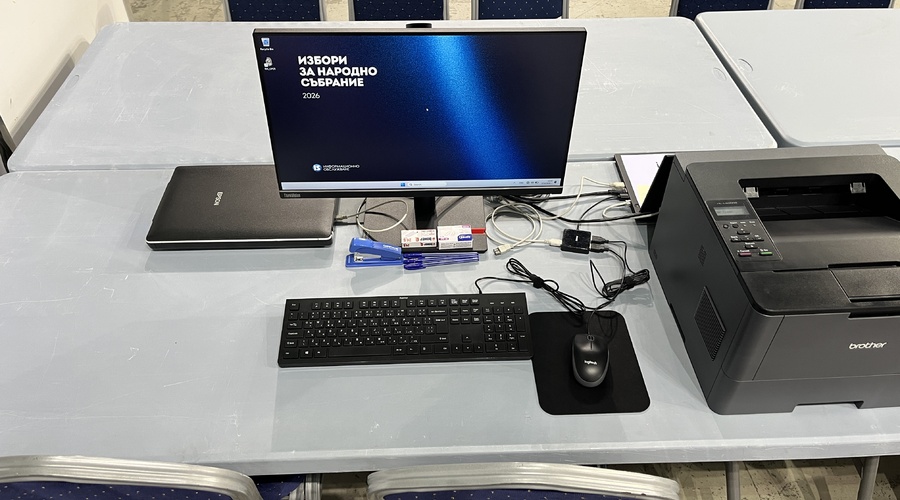
Information Services managed to provide live broadcasts and video recordings of the ballot counting after the end of election day in a total of 11,635 polling stations, or 99.83% of all polling station election commissions (PSECs) that met the requirements for providing video broadcasts. These are 41 more polling stations compared to the previous parliamentary elections in October 2024 and represents an absolute record since the introduction of video recordings of the ballot. Recordings are missing from only 19 polling station election commissions. All information and recordings have been uploaded and are publicly available online at https://evideo.bg.
The video recordings of the ballot platform, maintained by Information Services, have been visited by over 310,000 users since the end of Election Day, representing a 164% increase in interest compared to the previous elections. A total of 11,493 polling station election commissions broadcast the ballot counting live after the end of election day, which is also a record since the introduction of video broadcasting and video surveillance.
The Information Services team completed the computerized processing of the protocols and their subsequent re-verification in a record short timeframe as early as April 21, 2026, well ahead of the deadlines set out in the Electoral Code,” said Executive Director Ivaylo Filipov. According to him, these elections are yet another example of the company fulfilling its commitments to the electoral process with exceptionally high quality and on time.
To assist the polling station election commissions, Information Services developed the eProtocol mobile app, which is designed to validate data from the polling station election commission protocols and to enable public oversight of the election administration’s work. The app was downloaded a total of 21,000 times and helped drastically to reduce errors in the preparation of protocols by the polling station election commissions.
For the recent elections, Information Services developed and presented an interactive visualization of the methodology used to calculate election results and allocate seats among parties, coalitions, and independent candidates. At https://results.cik.bg/, any citizen can understand the mathematical process of seat allocation through 7 simple and easy-to-understand steps. Visual demonstrations based on the actual election results are presented.
To assist citizens and stakeholders, the Information Service also developed an electronic map of polling stations, which visualizes a vast amount of data on polling stations, including graphical representations. At https://map.cik.bg/pe202604/, there is detailed information on the numbers, addresses, and locations of all polling places in the country, preliminary information on the number of voters per list, whether the polling station uses a specialized machine voting device and paper ballots or only paper ballots, a link to the video surveillance recordings, and more. For each polling station in Bulgaria and abroad, the results of parties and coalitions that passed the 4% threshold are also visualized, while at the level of electoral districts, aggregated votes and allocated mandates are displayed.