Information Services digitizes core healthcare processes by implementing key projects in the sector. The company has successfully transformed numerous activities in both outpatient and inpatient care and has developed high-quality digital services that benefit patients, healthcare professionals, pharmacists, and all participants in the healthcare ecosystem. Among the major projects delivered are:
National Health Information System
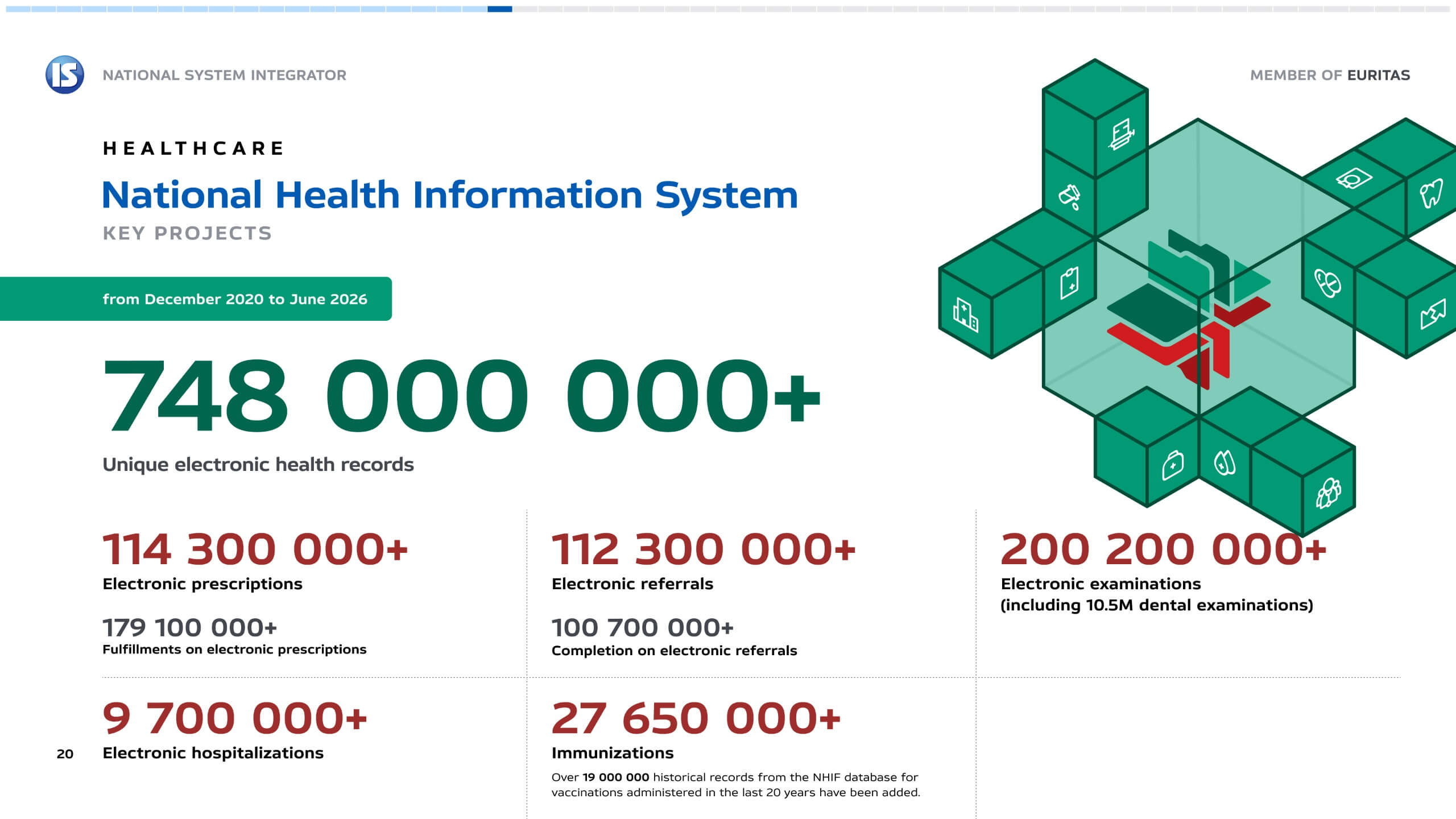
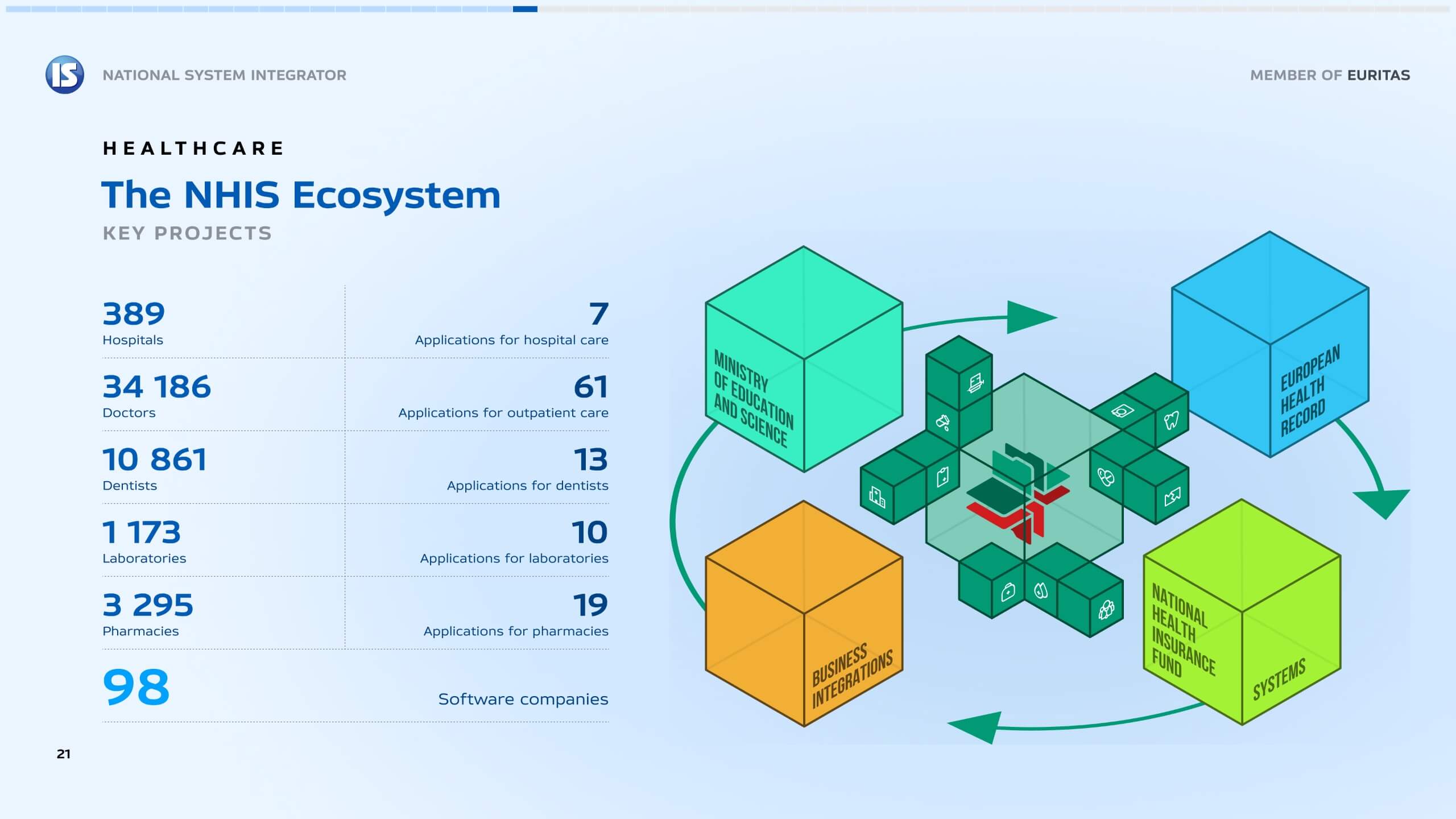
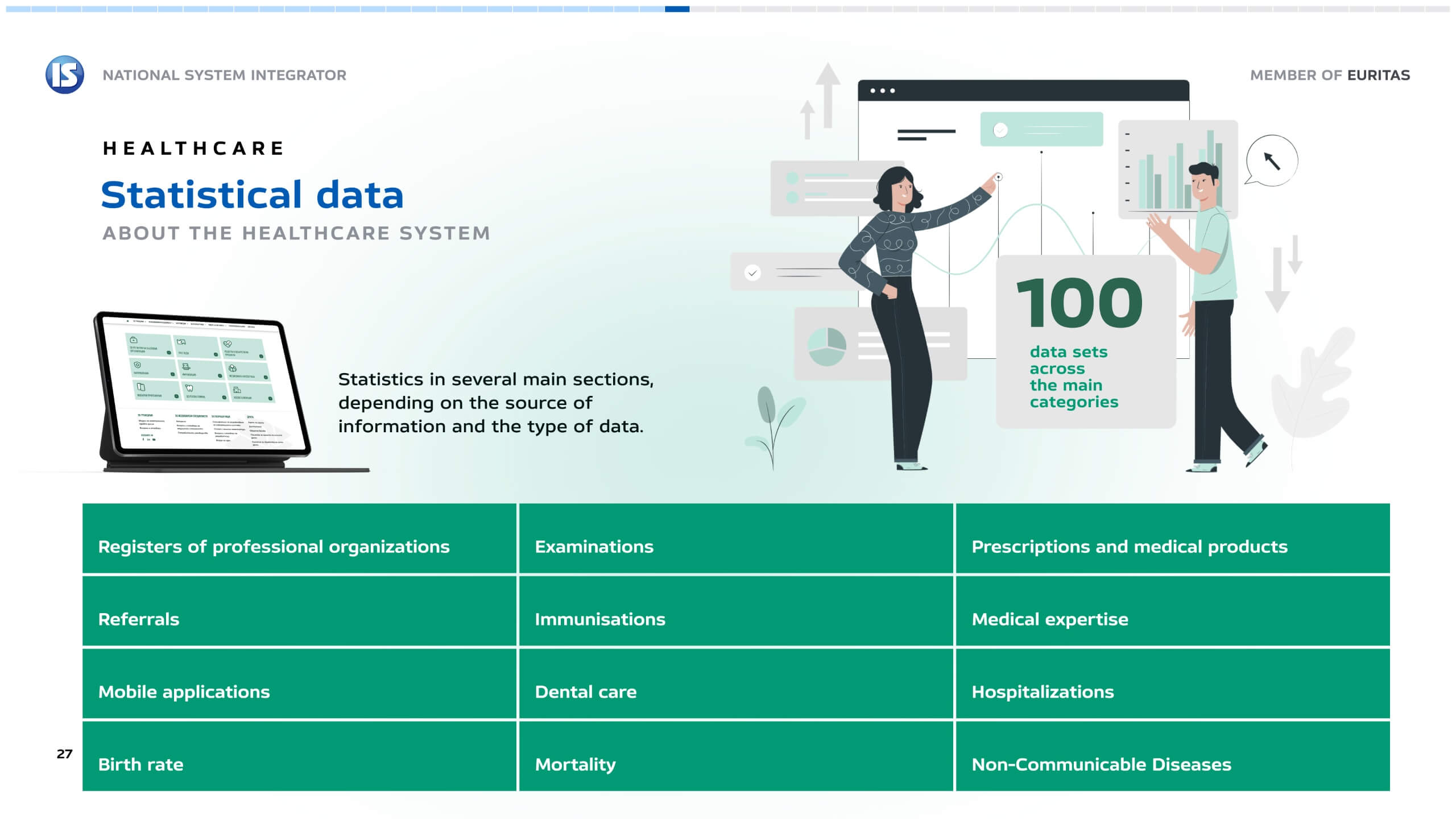
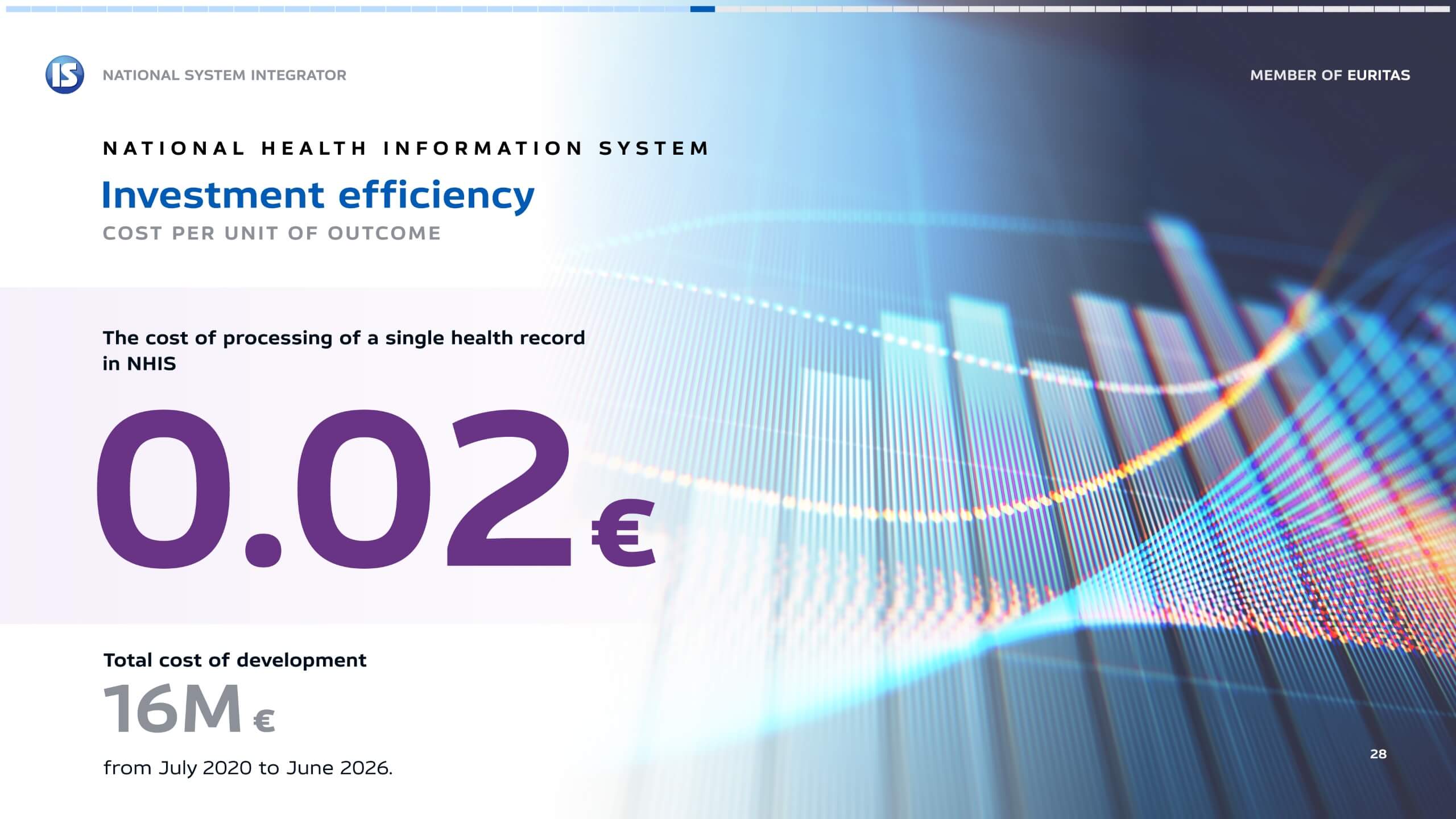
The National Health Information System (NHIS) is an open platform for the storage and exchange of medical information. The system provides a unified environment for the exchange of medical data among stakeholders in the healthcare sector. The NHIS establishes a uniform format for this data, as well as a standardized coding system for the terminology used in common nomenclatures. Medical data entered into the NHIS is created and stored in a standardized format. The NHIS web portal is available at his.bg. It contains information for all categories of system users—individuals, healthcare professionals, and software developers. The website provides detailed information related to the development of the NHIS, answers to frequently asked questions, news, and videos that help users navigate the system. The “Statistical Data” section provides free access to information in the NHIS, organized into thematic reports and separate categories. The information is updated daily.
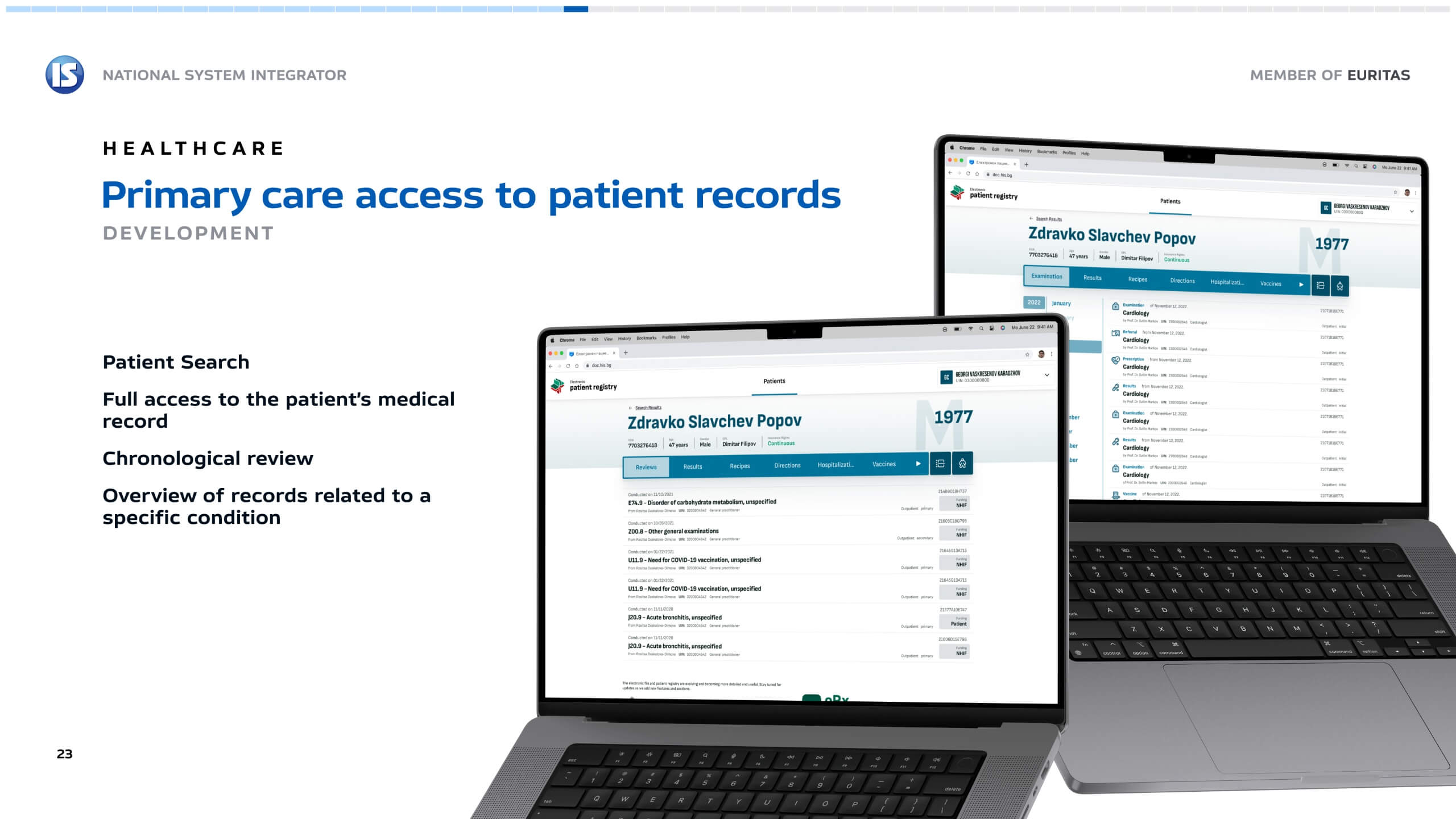
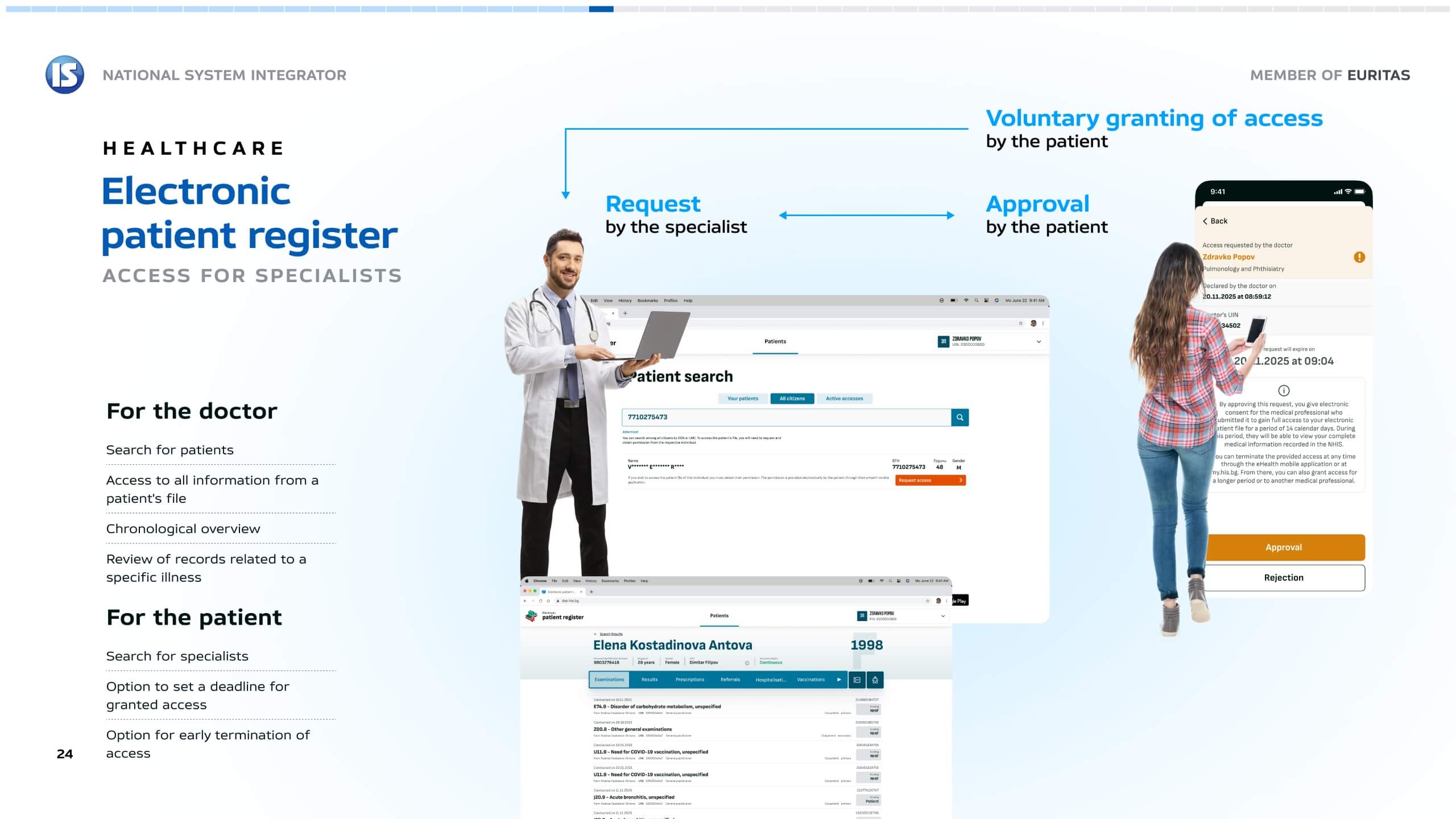
Healthcare professionals can access the Electronic Patient Registry at doc.his.bg. There, general practitioners can view all of their patients’ electronic health records, while specialists can request access to a specific patient’s file. The TEMC and NEMC commissions also have time-limited access to the registry.
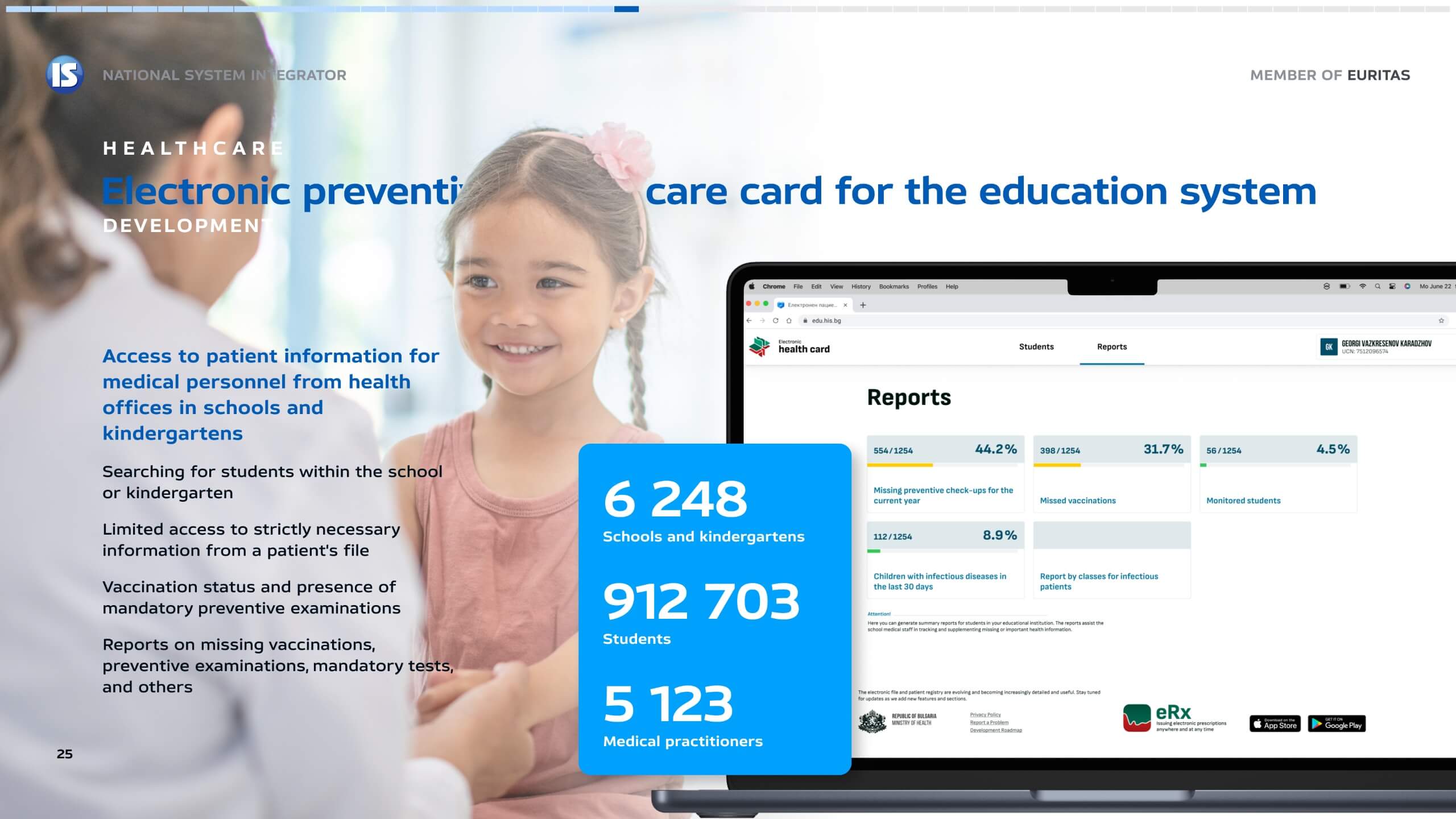
Medical personnel at schools and kindergartens access children’s electronic health records via edu.his.bg. The system includes the electronic preventive health card for the start of the school year and provides constant, up-to-date access to children’s vaccinations and preventive checkups.
The electronic health record is at the core of the National Health Information System (NHIS). It is created automatically upon the entry of the user’s first electronic health record and consists of 12 modules in which information is categorized by type. Individuals can access the information contained therein via my.his.bg and the eHealth mobile app. In addition to their own records, citizens also have access to those of their children until the children turn 18.
eZdrave Mobile App
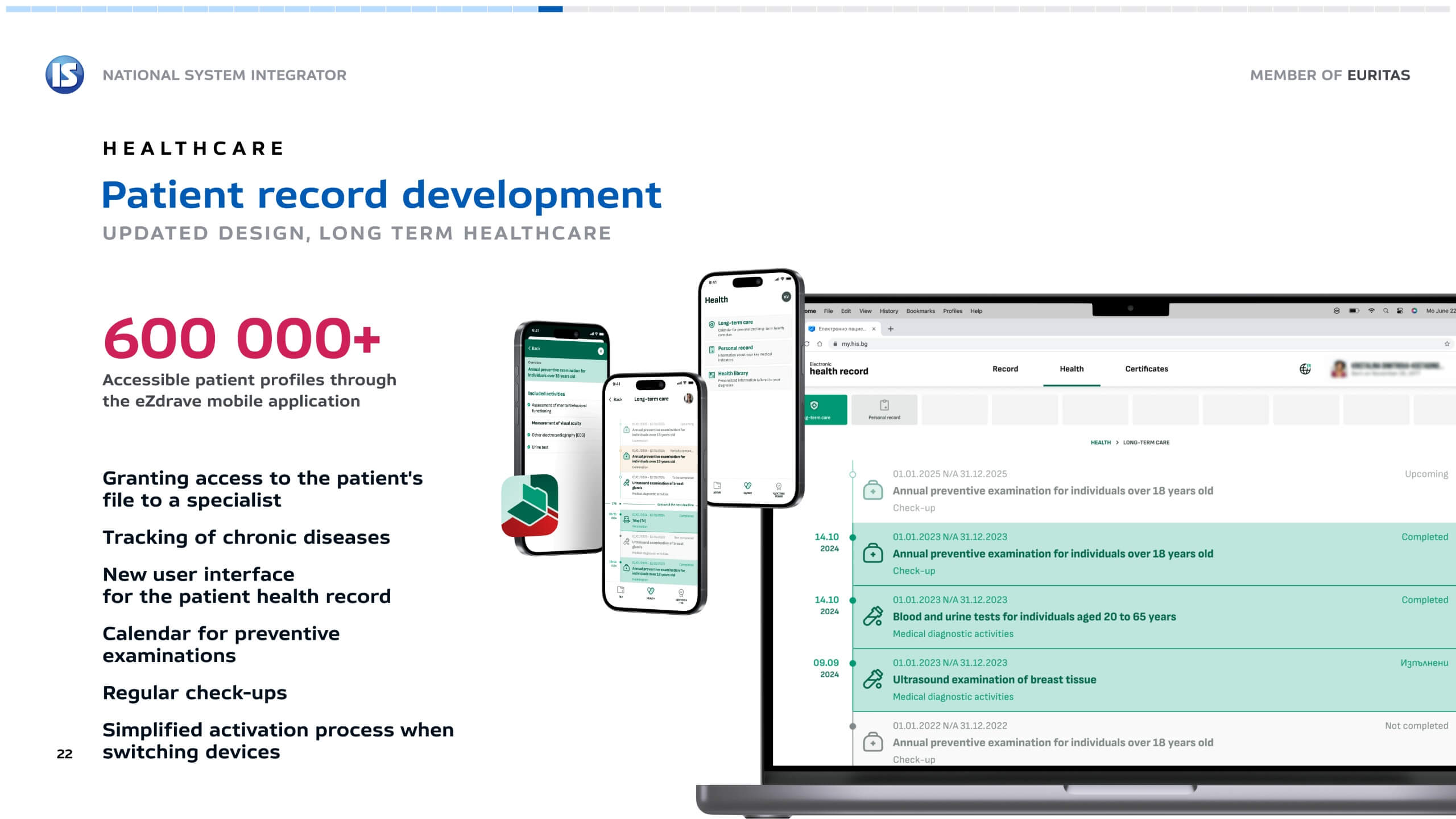
Developed by Information Services, the mobile app provides users with access to their personal electronic health records and to all available electronic health documents in the National Health Information System (NHIS)—medical examinations, referrals, laboratory test results, vaccinations, prescriptions, issued protocols for high-cost medications, hospital stays, blood donations, documents related to medical examinations, general health information, and more. Children’s electronic medical notes are available in the “Certificates” module. In the “Long-Term Care” module, users can view a personalized plan that outlines the services provided to them by the National Health Insurance Fund (NHIF) for the current year.
In addition to the electronic health records created by healthcare professionals, the electronic health record also contains a “Health Library,” which provides access to reliable information from the Ministry of Health on key topics related to users’ health. The electronic health record enables users not only to receive information but also to grant temporary access to doctors and dentists to all available information within it.
The app includes a feature for receiving notifications related to the issuance of a new electronic health document or a change to an existing one—such as a prescription, a referral, a ready laboratory test result, an event from the “Long-Term Care” module, and more.
The mobile app can be activated using a qualified electronic signature (QES), a cloud-based signature, or in person at an office of the Regional Health Inspectorate (RHI), the Regional Health Insurance Fund (RHIF), or the Information Services Department. When changing mobile devices, eHealth can be activated from the old device without the need for a repeat visit to an office or the use of a QES or cloud-based signature.
eRx Mobile App
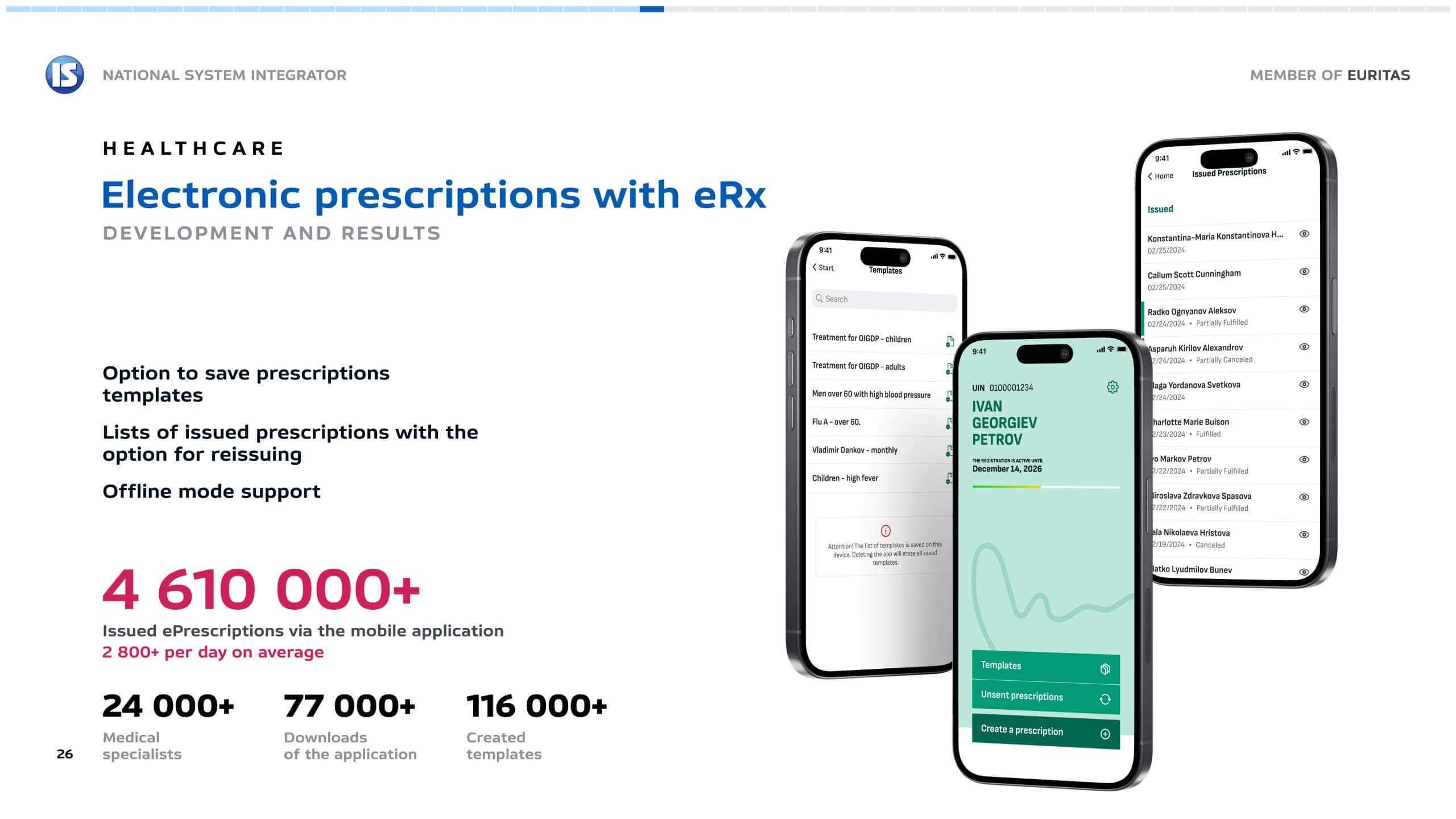
The mobile app enables all physicians who are members of the Bulgarian Medical Association, the Bulgarian Dental Association, and veterinarians to issue electronic blank prescriptions from a smartphone or tablet when they do not have access to a computer with medical software. Through eRx, e-prescriptions that meet the requirements of the National Health Information System (NHIS) can be issued during home visits and other emergency situations. The app allows prescriptions to be created offline; if there is no internet connection, they remain on the device and can be issued as soon as a connection is established. In addition, healthcare professionals can create templates for the most frequently used prescriptions and view a history of issued prescriptions.
Medical Expertise Control Information System (Territorial Expert Medical Commissions /National Expert Medical Commission)
A web-based information system that supports the entire process of medical evaluation and re-evaluation of patients with permanent disability by medical examination authorities. The system maintains an electronic profile for all individuals who have been or are currently undergoing medical evaluation. Through it, citizens can access referrals for the Technical Expert Medical Commission (TEMC) issued by general practitioners. The Information Services Department developed additional functionality for Medical Expertise Control Information System (MECIS), thanks to which patients with permanent reduced work capacity can now receive expert decisions from TEMC entirely electronically, without having to wait to receive them by mail or in person. A feature was also developed that allows expert decisions issued by the National Expert Medical Commission (NEMC) to be sent fully automatically to the regional offices of the National Social Security Institute (NSSI) via the Secure Electronic Delivery System (SEDS), without the need for human intervention.
System for Random Allocation of TEMC Applications
The System for random assignment of medical disability assessment applications, developed by Information Services, has reduced the time required to review patients’ applications from an average of 73 days to a maximum of 2 days—a reduction of nearly 96 percent. The introduction of random allocation of applications to the TEMC commissions has ensured greater transparency in the medical examination process and allows patients to receive their disability decisions in significantly shorter timeframes
The Information System for Control and Monitoring of Temporary Incapacity for Work Decisions
The Information System for Control and Monitoring of Temporary Incapacity for Work Decisions (ISCMTIWD) provides automation, traceability and control of the process of analysis of temporary incapacity for work documents of persons. The system allows integration of the information flows from the systems of NEMC, NSSI and NHIF.
Medications Protocols Processing System
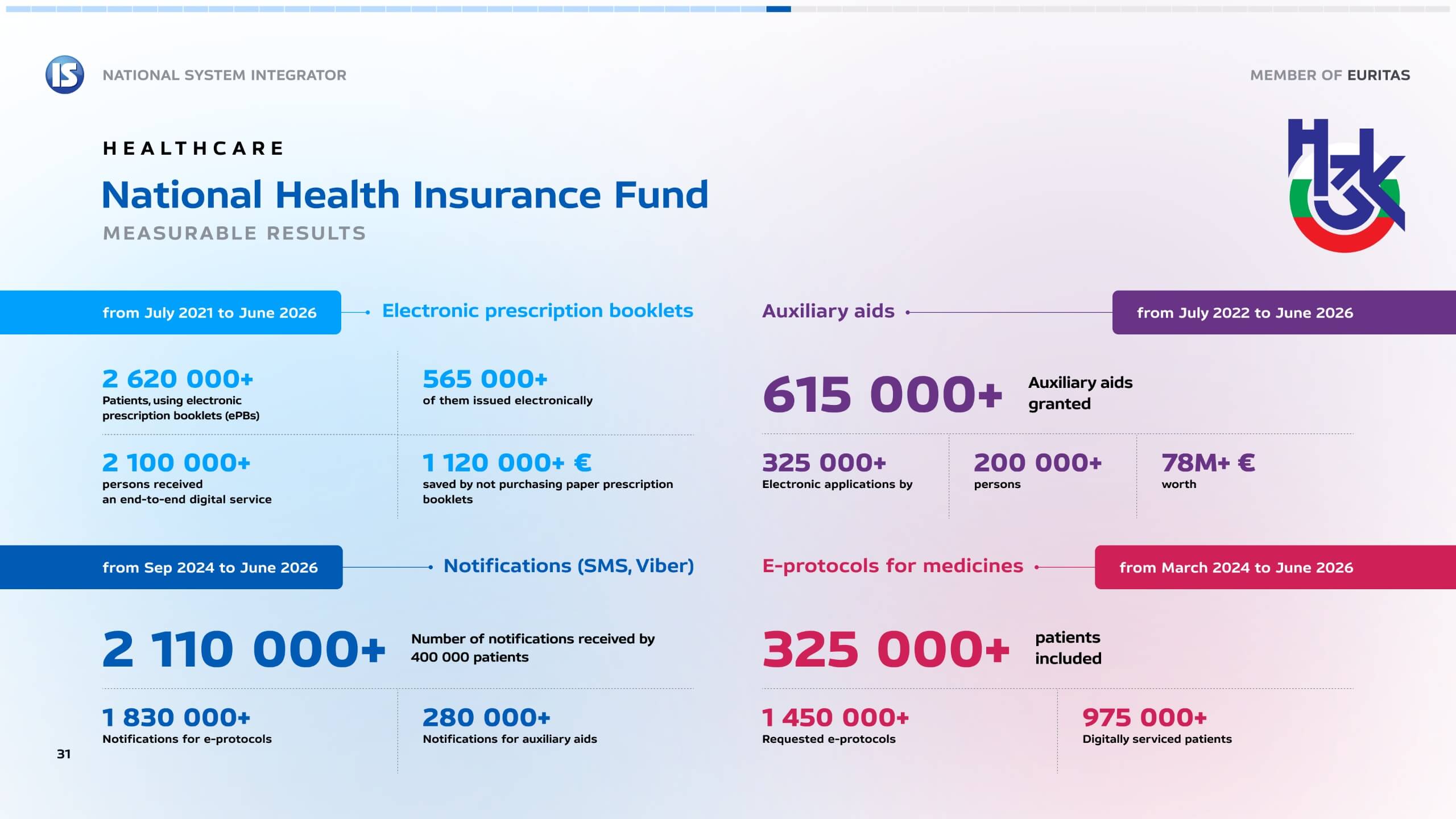
Information Services developed a system for electronic issuance of "Protocol for prescription of medical products paid by NHIF / RHIF" (E-protocols). It improves and increases the effectiveness of the control by NHIF over the prescription, dispensing and spending of costly medicines. With the e-protocol introduction, the obligation of the insured persons to visit the Regional Health Insurance Fund (RHIF) and to submit medical documentation for protocol validation is removed.
Electronic Prescription Books
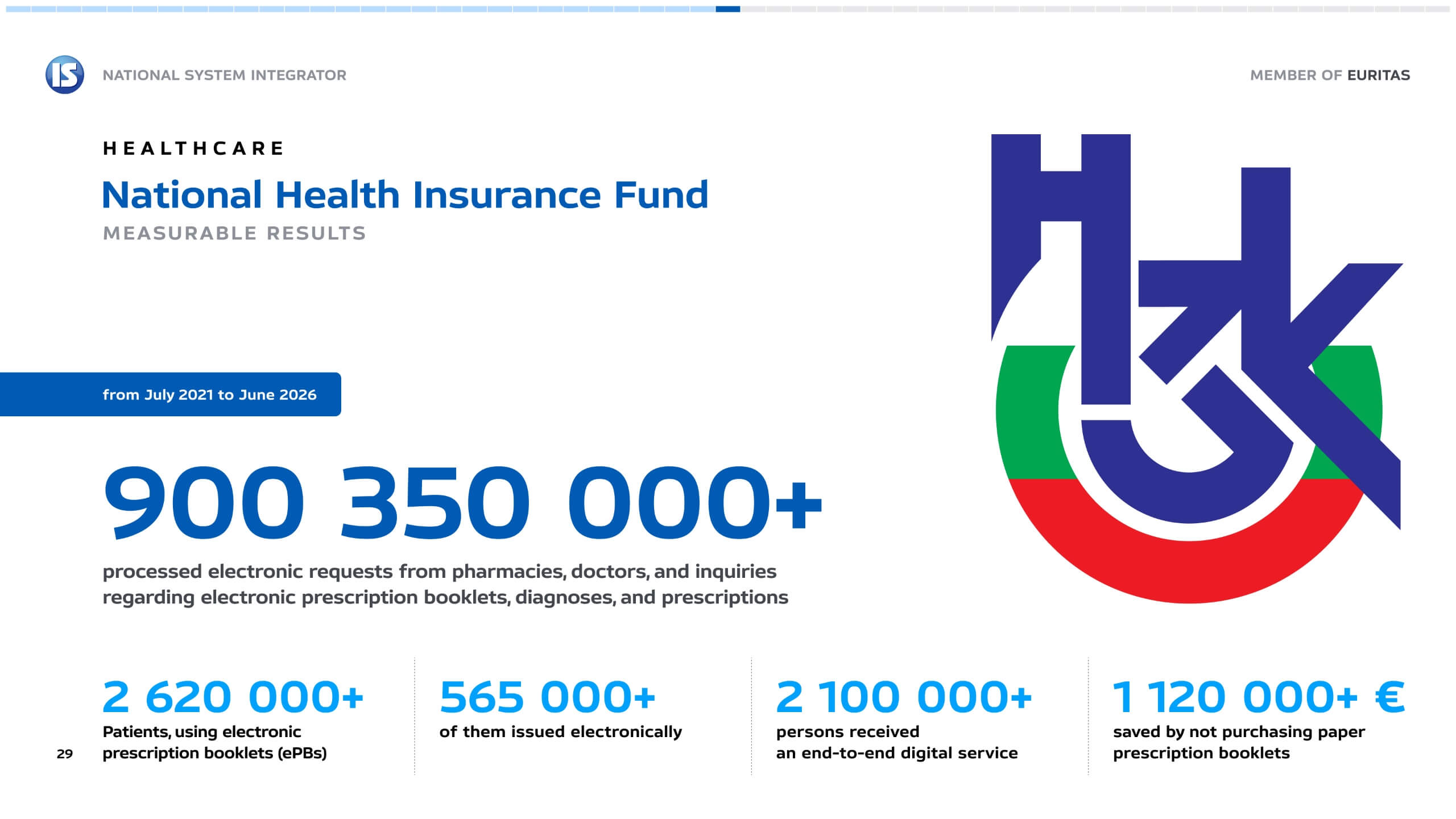
Through the established system for electronic prescription books to chronically ill patients, the paper equivalent is completely eliminated. Through digitalization, the process is simplified as much as possible, the time for serving one patient is reduced and the possibility of errors in the control of prescribing and dispensing medicines is minimized.
Automated Prescriptions Dispensing Reporting System
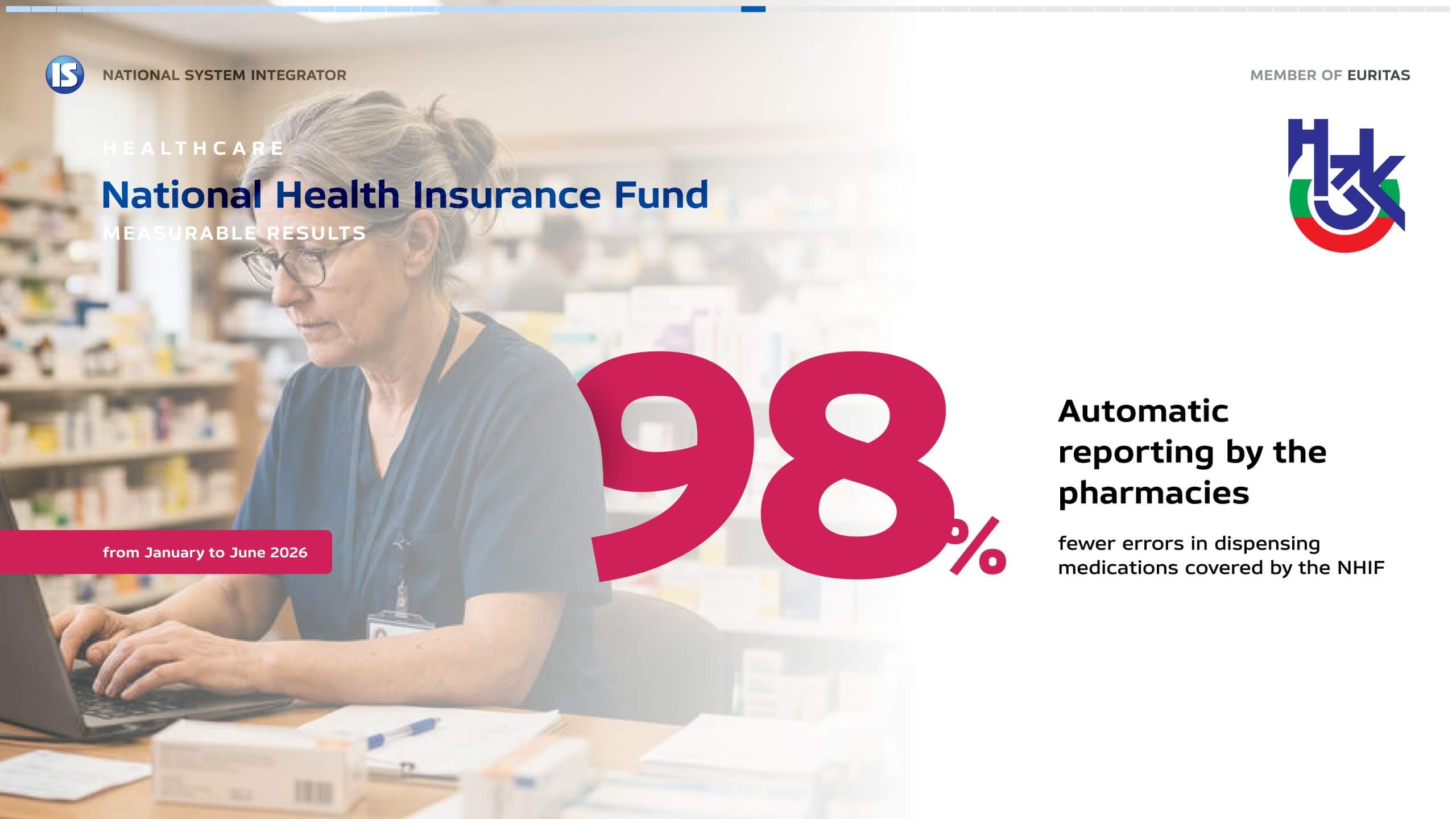
Through the Automated Prescriptions Dispensing Reporting System developed by Information Services, together with real-time monitoring of medication prescribing, errors in the dispensing of medicines partially or fully reimbursed by the National Health Insurance Fund (NHIF) have been reduced by more than 98%.
The reporting process is now carried out directly through the integration between pharmacy software systems, the National Health Information System (NHIS), and the NHIF database. This has completely eliminated the administrative burden and removed the risk of financial penalties for pharmacies resulting from technical errors.
National Control and Risk Analysis Platform
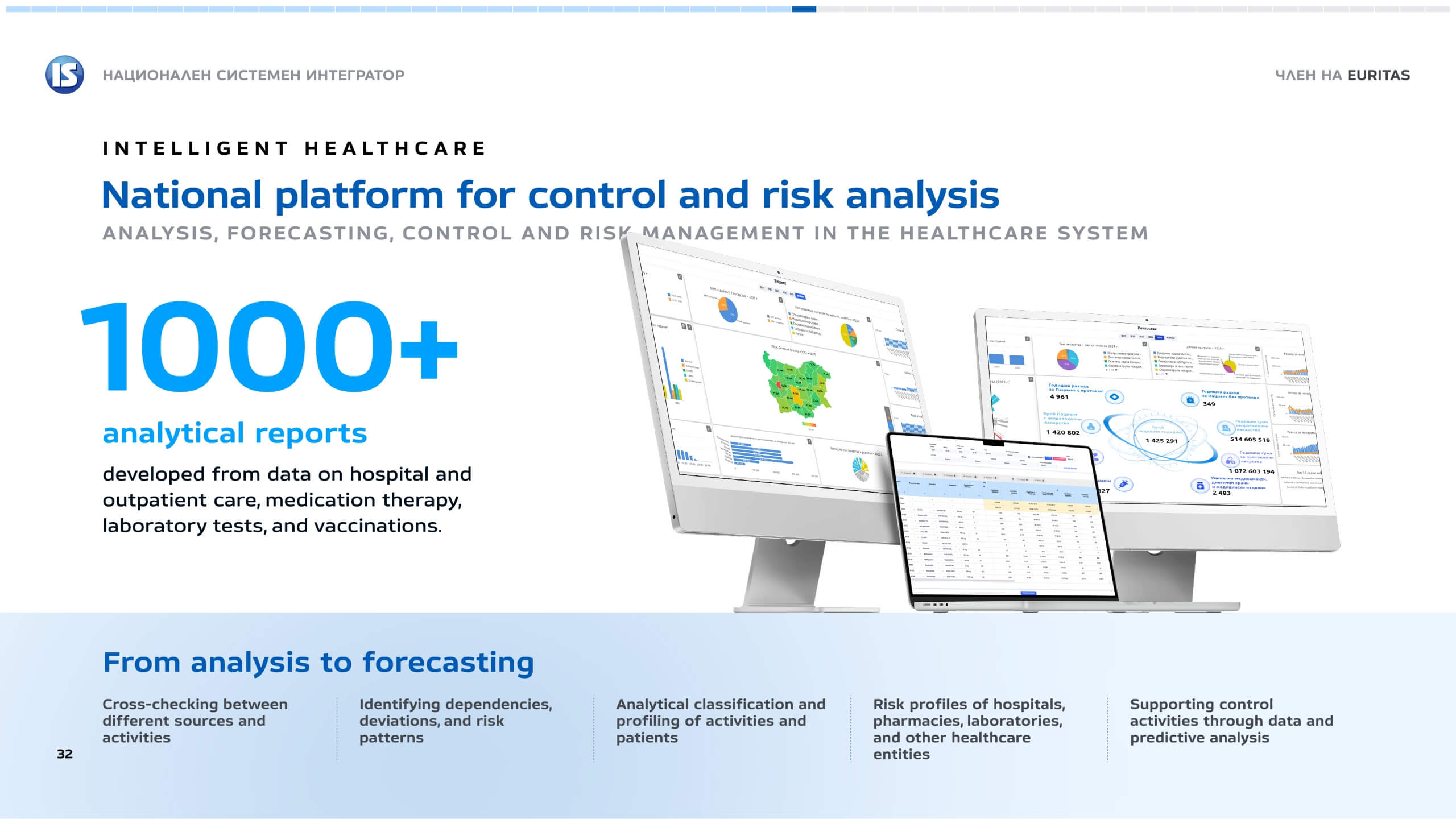
The Control and Risk Analysis Platform integrates and correlates data from multiple healthcare sources and activities, supporting the identification of relationships, anomalies, and risk patterns.
Through analytical classification, risk profiles are created for hospitals, pharmacies, laboratories, and other participants in the healthcare system. The data is used to improve the planning and execution of control activities, including predictive analytics and forecasting.
To date, more than 1,000 analytical reports have been developed, based on data related to inpatient and outpatient care, pharmaceutical therapy, laboratory testing, and vaccinations.